


Safe & Legal Routes

“Everyone has the right to seek and to enjoy in other countries asylum from persecution.” — Universal Declaration of Human Rights, Article 14.
Across the world, people flee violence, persecution, and danger in search of safety. The UK has a proud tradition of providing protection to those in need – yet in recent years, the asylum system has become increasingly hostile, punitive, and unsafe for those seeking sanctuary.
A compassionate asylum system is one that treats people with dignity: offering safety, fair processes, and humane treatment; rather than suspicion, punishment, or deterrence. As a Jewish human rights organisation, we draw on both Jewish texts and values and our historical experience to advocate for an asylum system built on fairness, humanity, and responsibility.
What are Safe & Legal Routes?
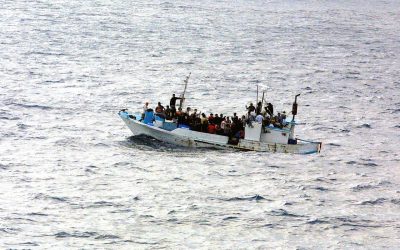
Every year, thousands of people seeking safety are forced into dangerous journeys because there are too few safe and legal ways to reach the UK. When people have no alternative, they risk exploitation, abuse, or death.
Safe routes offer a humane alternative. They provide orderly, regulated pathways for refugees to reach safety without relying on smugglers or risking their lives. They are also an essential part of the UK’s international obligations.
As a Jewish human rights organisation, we draw on a powerful tradition that insists on the preservation of life and the welcoming of the stranger. Jewish history teaches us vividly what it means to flee danger, to search for refuge, and too often to find borders closed. This memory shapes our conviction that safe routes are not just a policy choice – they are a moral necessity.
What Safe Routes Exist Today?
The UK currently provides a patchwork of safe routes, but many are limited, nationality‑specific, or too small in scale to meet global needs. Since the end of COVID, governments have consistently changed refugee routes and altered rules based on political whim or in response to scandals. This makes it very hard to consistently monitor safe routes and very difficult for those fleeing persecution to plan their route to safety.
- The Refugee Resettlement Schemes (UKRS) is the UK’s primary resettlement pathway, operated with UNHCR referrals. It brings the most vulnerable refugees to the UK from outside the country. It includes the Mandate Scheme and Community Sponsorship routes under its umbrella. Resettlement numbers are historically low: just 872 people were resettled in the year ending June 2025.
- Community Sponsorship is when local community groups – including faith communities – sponsor and support resettled refugees directly. This sits alongside UKRS and allows communities to play a hands‑on role in welcome and integration.
- Family reunion allows recognised refugees in the UK to bring certain family members to join them. However, rules have tightened, limiting eligibility, particularly for parents, older children, and extended relatives. This leaves many refugees isolated and alone, and compounds the trauma they have been through.
- Following the Russian invasion of Ukraine in 2022, the UK introduced three major schemes including the Homes for Ukraine (Sponsorship Scheme), Ukraine Family Scheme, and Ukraine Extension Scheme. Together, they have provided hundreds of thousands of visas, though numbers dropped significantly by 2024. We see the Homes for Ukraine Scheme as particularly inspirational in demonstrating how successful a Safe Routes scheme can be when there is public support.
- Since 2021, Hong Kong residents with British National (Overseas) status have been able to live, work, and study in the UK. Many Hong Kongers continue to rely on this route to escape political repression. The scheme offers a clear and structured process without requiring an asylum claim, making it an accessible and predictable safe route.
- The UK continues to run two primary pathways for Afghans fleeing danger: the Afghan Relocations and Assistance Policy (ARAP) and the Afghan Citizens Resettlement Scheme (ACRS). However, many eligible Afghans – including those who supported UK operations – continue to face long waits and uncertainty. Nonetheless, ARAP and ACRS remain critical safe routes for Afghans with protection needs, providing a lawful pathway into the UK where other routes are inaccessible.
Since the end of COVID, governments have consistently changed refugee routes and altered rules based on political whim or in response to scandals. This makes it very hard to consistently monitor safe routes and very difficult for those fleeing persecution to plan their route to safety.
Our Work on Safe Routes
When safe routes are set up, they offer live-saving help to people who need it. We acknowledge that in many cases the operation of successful routes takes a big degree of cooperation between communities and between states. This is politically unviable when populist voices who demonise people seeking safety are so loud in our society, which is why part of our work focuses on shifting narratives around refugee routes and amplifying Jewish voices in the national conversation around asylum, which counters harmful narratives with ethical leadership.
We have seen controlled safe routes set up successfully and with public support in a number of contexts, which is why we are optimistic that the same can be implemented in future and standardised as a response to international atrocity crimes. We advocate nationally for expanded safe routes and point out to policymakers the ways in which they may be introduced despite logistical challenges and pressure from the far-right.
Why Safe Routes Matter in a Jewish Context
Jewish history is defined by moments when access to safe refuge meant the difference between life and death. From biblical teachings on protecting the stranger, to medieval expulsions, to the Kindertransport and Holocaust-era flight from persecution, the ability to flee danger has always been a matter of survival for our community. When refugees cannot escape harm, we are reminded of the times our own families faced closed borders. Our advocacy for safe routes honours that memory and expresses the most enduring commitments of Jewish ethics.
The Refugee Convention Timeline
Jewish communities around the world carry in our hearts a millennia-long history of fleeing persecution and seeking...
Immigration and the Golden Door
By Peter Skyte “Britain is an island of strangers”; “The UK has been colonised by immigrants” Such phrases have echoed...
International Women’s Day 2026 Statement
Rights. Justice. Action. For ALL Women and Girls This year’s theme reminds us that the promise of human rights...
Our Submission on the 1951 Refugee Convention to the Standing Group on Atrocity Crimes
René Cassin submitted evidence to the Standing Group on Atrocity Crimes, calling for refugee protection to be...
From Kindertransport to Today: My Father’s Story on Why Refugee Families Must Stay Together
by Sue Lukes The government has paused and may restrict refugee family reunions. I read the announcements about it,...
From Alexandria to London: My Grandfather’s Journey to Belonging
By Martha Slater My grandfather, Raymond Joseph Dwek, arrived in the UK on a cold winter’s morning in January 1957. It...
From Slavery to “Your Lifestyle”: Reflections on Freedom for Anti-Slavery Day
Blog for Anti-Slavery Day written by. Rabbi Eliyahu Goldsobel Earlier this year, I finally travelled to Budapest...
National Hate Crime Awareness Week 2025
As we mark Hate Crime Awareness Week 2025, with this year's theme focusing on disability hate crime, we are reminded...
Ways you can help our Hostile Environment campaign
There are many steps you can take to help grow and support this initiative to improve the safety of vulnerable groups.

Donate

Attend our events
